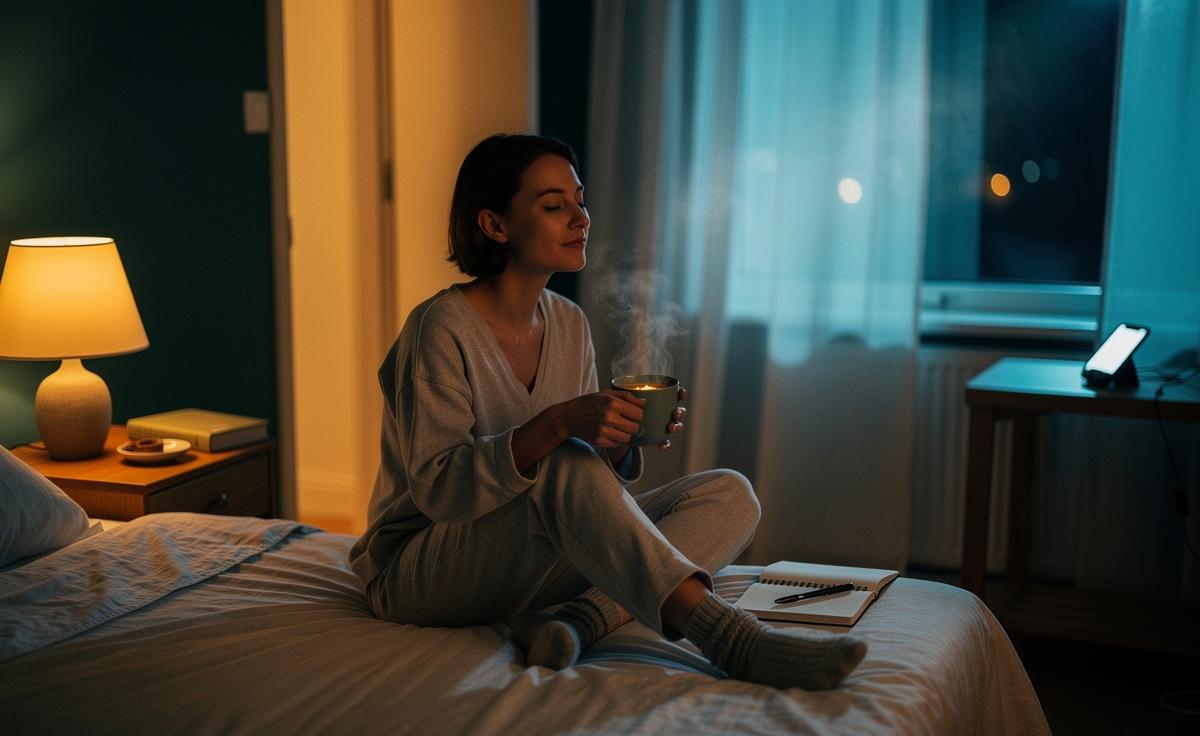
In a nutshell
- 🌙 Establish a consistent wind-down window (20–45 minutes) with dim lights and a predictable sequence to cue your circadian rhythm.
- 🫁 Use 4-6 breathing, gentle stretches, and a brief body scan to activate the parasympathetic response and release tension.
- 💡 Curate a low-light, low-tech bedroom; park phones away, use warm lighting, and weigh white noise vs. silence based on your environment.
- 📝 Do a two-minute brain dump and a focused tomorrow list to offload worries and convert rumination into actionable steps.
- 🥣 Optimise nutrition and temperature: avoid late caffeine and alcohol, choose light snacks, and keep the room cool (16–18°C) while keeping your body warm.
A calm night is not a luxury; it is a repeatable system. By stacking a few simple bedtime routines, you can soothe a racing mind, cue your body for rest, and sleep more deeply without expensive gadgets. The key is to reduce stimulation and set gentle signals that it is safe to power down. Consistency beats intensity: a short routine done nightly works better than a heroic one done once a week. Drawing on practical insights and British lived experience, this guide focuses on habits you can adopt tonight—no apps required, no 5am clubs demanded. Think small, deliberate steps that chip away at stress and build reliable rest.
Set a Predictable Wind-Down Window
Sleep is governed by your circadian rhythm, a 24-hour clock trained by light, temperature, and routine. Aim for a 20–45 minute wind-down window at roughly the same time each night. Keep it quiet, dim, and repetitive. When your evening unfolds in a similar order, your brain recognises the pattern and reduces arousal. Don’t try to overhaul your entire schedule at once. Start with the easiest domino: choose a bedtime you can keep four nights out of seven and build from there. If you get home late, compress the routine rather than skipping it; consistency matters more than duration.
Here is a compact sequence you can copy straight away. Keep the steps friction-light—everything should be reachable within a short walk, with no decisions required. Decision fatigue at night is the enemy of good sleep. Set a soft alarm as a “go-to-bed” cue, treat it like a meeting with yourself, and make it boringly predictable. Within a week, you’ll notice you fall asleep faster because your body anticipates rest.
| Step | Duration | Why It Helps |
|---|---|---|
| Dim lights and tidy five items | 3 mins | Visual calm lowers cognitive load |
| Warm drink (caffeine-free) | 5 mins | Signals slowing down; warmth relaxes |
| Breathing or gentle stretches | 7 mins | Activates the parasympathetic system |
| Write “tomorrow list” | 5 mins | Offloads worry and tasks |
Breathe, Stretch, and Discharge Tension
Most of us arrive at bedtime with shoulders by our ears and chests tight from the day. Short, structured breathwork and gentle mobility help cut that physiological noise. Try the 4-6 breathing pattern: inhale for four, exhale for six, for five minutes. Longer exhales tell your nervous system the threat has passed. Pair it with two or three slow stretches—calf stretches against a wall, a seated forward fold, or a door-frame chest opener. Keep it low-effort: no sweat, no music, no mat required. The aim is to release, not to “work out”.
Consider a brief “body scan”: move attention from crown to toes, labelling sensations without judging—tight, warm, fluttering. Name it to tame it: when you label the feeling, you soften its grip. If thoughts intrude, return to the breath count. Why a short routine isn’t always better: if you rush, you risk carrying agitation into bed. Why a longer routine isn’t always better: if it feels like a chore, you won’t repeat it. Right-size your practice so it fits even on your worst day.
- Do: 5 minutes of 4-6 breathing; two slow stretches; a 60-second body scan.
- Avoid: intense yoga flows, flashy apps, or anything that spikes heart rate close to bedtime.
Curate a Low-Light, Low-Tech Bedroom
Light is the master switch for sleepiness. An hour before bed, shift to warm, dim lighting. If you can, fit low-watt lamps or use a warm-toned bulb; keep overheads off. Blue-heavy light late at night can delay melatonin and push sleepiness back by hours. Make screens boring: grayscale mode, low brightness, no notifications. Better still, charge the phone in another room and keep a simple alarm clock by the bed. If you read, choose print or an e-reader without backlight; if you must use a tablet, enable the warmest night filter and set a strict cut-off.
Noise is personal. Some sleepers nod off to gentle white noise, others prefer quiet. Consider this quick contrast to find your fit. There is no single correct soundtrack to sleep—only what lowers your arousal.
- White Noise vs. Silence – Pros and Cons
- White noise pros: masks traffic, neighbours, and creaks; steady and predictable.
- White noise cons: may irritate light sleepers; reliance can be awkward when travelling.
- Silence pros: effortless, no kit, no cost; highlights natural tiredness cues.
- Silence cons: sudden sounds can jolt you awake; not viable in noisy flats.
A Small Ritual with Big Impact: Pen, Plan, and Park Worries
Racing thoughts are the stealth saboteur of sleep. A two-minute “brain dump” plus a “tomorrow list” helps park concerns outside your pillow. Take a notepad—paper beats phone—and write everything pinging in your head: emails, errands, awkward conversations. Then circle the first two actions for tomorrow. By converting worry into a plan, you signal safety and restore a sense of control. Add one line of gratitude to angle your mind towards sufficiency rather than scarcity. Keep the sheet by the kettle so it is effortless to repeat.
Case note: A Manchester nurse I interviewed, often on rotating shifts, shaved her routine to five essentials—dim lights, peppermint tea, brain dump, two stretches, page of a paperback. Within ten days, she reported falling asleep 15–20 minutes faster and waking once instead of three times. She didn’t fix her shifts; she fixed the cues around them. This is the power of a tiny, consistent ritual. The goal is not perfection but pattern. If you miss a step, move on; unfinished is better than skipped.
Nutrition and Temperature: Tiny Tweaks That Matter
What you sip and the temperature you sleep in can nudge your night markedly. Avoid late caffeine (tea, coffee, energy drinks) for at least six hours before bed; caffeine has a long half-life. Alcohol isn’t a sleep aid: it fragments sleep and suppresses REM. If you need a bridge snack, choose something light—Greek yoghurt with honey, a small banana, or oatcakes with nut butter—to prevent 3am hunger without spiking blood sugar. Hydrate earlier in the evening and take only a few sips before bed to reduce bathroom trips.
Thermally, the sweet spot is a cool bedroom with a warm body. A brief warm shower or bath helps because your core temperature drops afterwards, cueing sleepiness. Keep the room between about 16–18°C if possible, and use breathable bedding. Think “cool cave, warm nest”. Troubleshooting: if you wake hot, layer blankets you can peel off easily; if your feet are cold, add socks—warming extremities helps blood redistribute and can speed sleep onset.
True rest rarely comes from a single hack; it comes from a repeatable, human-sized system. Choose one wind-down window, add a breath-and-stretch micro-routine, dim the lights, and park your worries on paper. In a week, measure your wins: faster sleep onset, fewer awakenings, calmer mornings. Small, sustainable changes compound into reliably better nights. Which one change will you test tonight, and how will you tweak it over the next week to make it your own?
Did you like it?4.5/5 (24)