In a nutshell
- 🌬️ Clear and light your entryway to invite qi: declutter, use closed storage, add a warm lamp, and avoid a mirror facing the door to keep energy flowing inward.
- 🛏️ Position the bed in the commanding position with a solid headboard, balanced bedside tables, and a calming palette; create a tech-free, textured sanctuary for deeper rest.
- 🌿 Style your living room with the five elements (wood, fire, earth, metal, water): layer colours and materials thoughtfully, and balance cool greys with natural warmth for adaptable, lively energy.
- ⚖️ Use a simple Pros vs. Cons lens: more accessories aren’t always better—edit monthly, rotate accents seasonally, and notice how each tweak affects mood and routine.
- ⏱️ Embrace quick wins: small, five-minute changes—like a grounding runner, softer bulbs, or removing under-bed clutter—can deliver immediate calm and daily ease.
Feng shui is not mysticism so much as practical design with a poetic edge, and it’s wonderfully suited to the constraints of British homes. In terraces where hallways are narrow and flats where every square metre counts, small adjustments can shift how a space feels and functions. Today’s focus is on three precise changes you can make before teatime: welcoming energy at the door, restoring balance in the bedroom, and refreshing the living room with the five elements. Start with what you can move in minutes, not months. The pay-off? A home that supports your routines, your rest, and your relationships—without a costly renovation. Here’s how to begin.
Reset Your Entryway to Invite Qi
Think of the front door as the lungs of your home: it’s where the fresh qi enters. In countless hallway walk-throughs from Hackney to Harrogate, I’ve seen the same friction point—shoes, parcels, and coats clogging the “breath” of the space. Begin with a clear line of sight from the door to an intentional focal point: a slim console with a bowl for keys, a framed print, or a small plant. Avoid a mirror directly facing the door, which can bounce energy straight back out. Good lighting matters; swap a cold bulb for a warm LED and add a motion-sensor lamp if the corridor is tight.
Quick wins I’ve verified on shoots and home visits:
- Declutter ruthlessly; use closed storage for shoes and umbrellas.
- Place a grounding mat or runner to slow the pace and signal arrival.
- Add a healthy plant to soften edges; avoid spiky leaves in cramped halls.
- Choose a doormat with a welcoming word or calm motif.
Pros vs. Cons in the entryway:
- Pros: Better first impression, reduced morning stress, safer flow.
- Cons: Over-accessorising creates visual noise; a mirror opposite the door can feel restless.
In one London flat, simply rotating a shoe rack ninety degrees, adding a soft uplight, and hanging a single coastal print transformed a stop–start threshold into a calm arrival zone. Small shifts compound into daily ease.
Balance the Bedroom for Rest and Romance
The bedroom is your private battery pack. Anchor the bed in the commanding position: diagonally opposite the door with a clear view of entry, yet not in line with it. A solid headboard against a supportive wall promotes a sense of security; avoid placing the bed under a heavy beam or low shelf that “presses” down. Symmetry signals stability—matching bedside tables and lamps help balance yin (restful) and yang (active) forces, even in compact rooms common across UK rentals. If space allows, give each side of the bed equal access to minimise nightly jostling.
Supportive choices I recommend to readers and homeowners alike:
- Clutter amnesty: clear under-bed storage; if unavoidable, keep soft items like linens only.
- Calming palette: muted earths, soft blues, or blush neutrals; reserve hot reds for accents.
- Tech curfew: move chargers to a desk; light, sound, and notifications erode sleep quality.
- Texture mix: breathable cottons, a wool throw, and a grounding rug underfoot.
Why maximalism isn’t always better: saturated patterns and overstuffed decor can over-stimulate, making the room feel busier than your brain needs at midnight. Conversely, ultra-minimal setups can stray into sterile. Aim for warm simplicity: one statement artwork, a plant with rounded leaves, and soft, layered lighting. In a Manchester case study, a couple swapped a metal headboard for an upholstered one, introduced warm bedside lights, and removed a TV. Within a fortnight, they reported deeper sleep and fewer late-night rows. Balance is a feeling you notice before you can name it.
Re-energise Your Living Space with the Five Elements
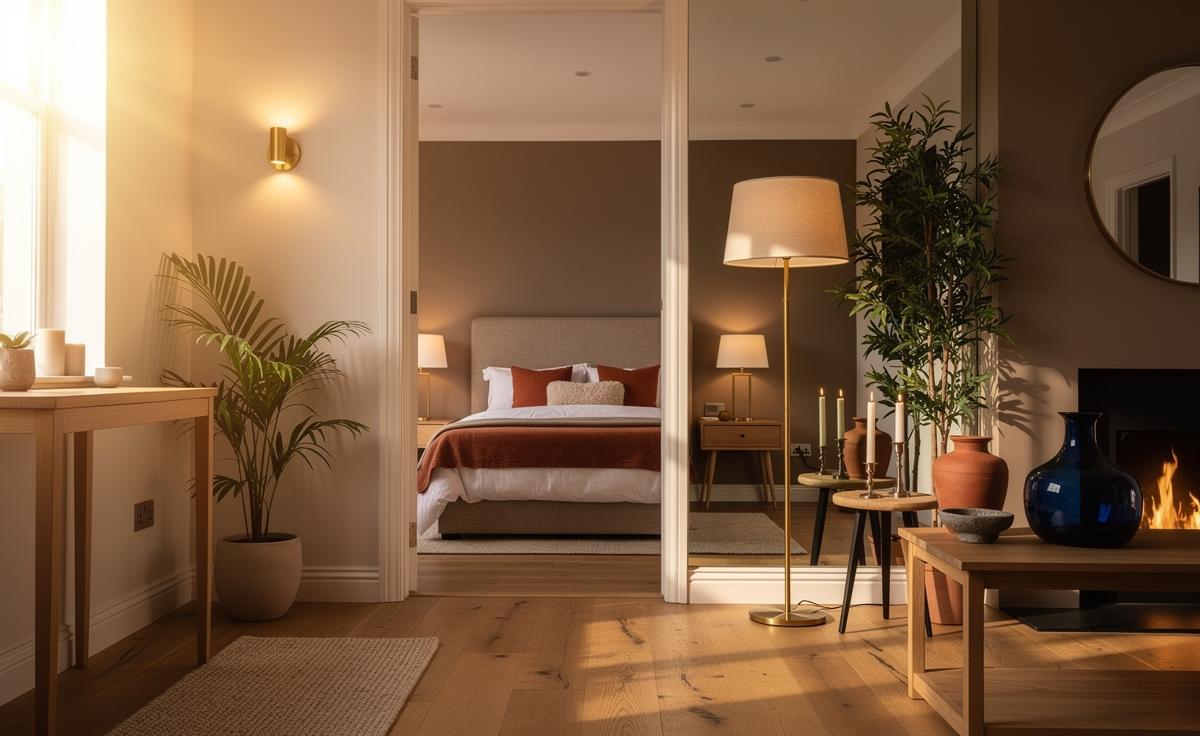
Living rooms work hard: hosting Netflix nights, playtime, and the odd Zoom call. To keep energy flexible, use the five elements—wood, fire, earth, metal, water—as a design vocabulary. You’re not building a shrine; you’re layering materials and colours so the room feels alive but not chaotic. Think “seasonal balance” rather than strict rules. In a Bristol semi with a long, narrow lounge, we used a tall plant (wood) near the dim end, a textured terracotta pot (earth) by the sofa, and brushed brass accents (metal) to sharpen edges, avoiding the all-grey fatigue many readers mention.
| Element | Colours/Materials | Simple Add | Overuse Risk |
|---|---|---|---|
| Wood | Greens, timber, rattan | Leafy plant, oak frame | Too many plants = clutter |
| Fire | Reds, oranges, candles | Candle trio, warm throw | Agitation, restless tone |
| Earth | Beige, clay, ceramics | Terracotta pot, stone bowl | Heavy, stuck energy |
| Metal | White, grey, brass | Brass lamp, round mirror | Cold, clinical feel |
| Water | Blues, glass, curves | Navy cushion, wavy vase | Melancholic tone |
Practical sequencing:
- Tone map the room: if it’s already cool and grey (metal/water), add wood and earth for warmth.
- Light layers: blend a floor lamp (fire) with daylight mirrors (metal) to soften shadows.
- Edit monthly: rotate accessories seasonally to keep energy fresh.
Why “more decor” isn’t always better: the five elements are a chorus, not a solo. Start small, observe the mood for a week, then adjust. Your living room should breathe with the day’s needs.
From a clearer threshold to a calmer bed and a more responsive living room, these three adjustments can be actioned today with what you already own. Approach them like journalism for your home: observe, test, and refine. If a change nudges your routine in a happier direction, keep it; if not, edit and try the next cue. Feng shui’s power lies in attention, not superstition. Which room in your home feels most in need of a reset right now—and what’s the first five-minute adjustment you’ll try this week?
Did you like it?4.5/5 (20)