In a nutshell
- 💎 Blue Lace Agate overview: a chalcedony quartz with soothing blue-and-white banding, Mohs 6.5–7, linked to the throat chakra and used as a tactile anchor for emotional calm.
- 🧘 Habit-first rituals: January-friendly micro-practices (box breathing, commute pocket-anchor, tea-and-note, meeting buffer, bedside wind-down) that pair the stone with breathwork—consistency beats intensity.
- ⚖️ Pros vs. Limits: portable, affordable, and effective as a somatic cue for calmer speech—but not a substitute for therapy or addressing structural stressors; avoid magical thinking.
- 🧼 Care and use: simple cleaning (lukewarm water, mild soap), gentle recharging (indirect sun/moonlight), and storage away from harder gems to preserve its calming role.
- 🌍 Buying smarter: verify authenticity (subtle, uneven banding; avoid neon blues), ask for origin disclosure, and prefer retailers with clear ethics and fair sourcing.
9 January 2026. As the United Kingdom settles into its grey-skied routines, the urge to find steadiness grows urgent. Among winter’s small mercies is the pale, banded reassurance of Blue Lace Agate—a stone long associated with softening tempers and smoothing conversations. Its appeal is not merely mystical; the colour blue is widely read as calming, and the stone’s satin texture invites a slower breath. When the calendar’s promise of a “new you” feels brittle, gentle practices beat grand pledges. What follows is a clear-eyed, practical guide to using this stone to cultivate emotional calm—rooted in material facts, everyday rituals, and a reporter’s ear for what truly works.
What Makes Blue Lace Agate a Calm Companion
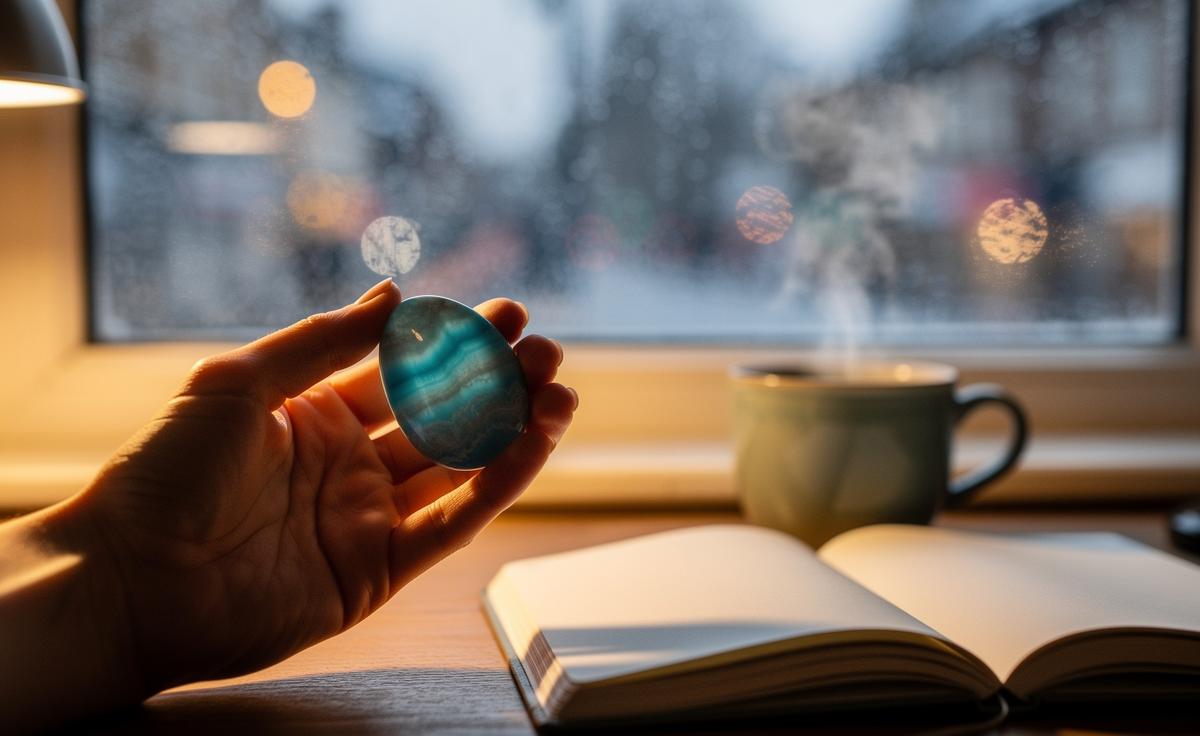
Blue Lace Agate is a variety of chalcedony, a microcrystalline quartz formed in volcanic cavities where silica-rich fluids cooled in fine layers. Those milky, cornflower bands—often from Namibia and South Africa—create the “lace” that makes each piece distinctly striated. Geologically modest yet visually lyrical, it sits at 6.5–7 on the Mohs hardness scale: durable enough for daily handling, but still gentle on the palm. Colour psychology has long associated blues with serenity, focus, and trust; hold a cabochon to the light and the feathered bands seem to map a slower rhythm.
From a wellbeing standpoint, the stone’s calm is partly a tactile anchor. The cool surface and rounded edges cue the body to pause, mirroring the effect of slow breathing. Symbolically it is linked to the throat chakra, making it a favourite for journalist notebooks, therapy rooms, and bedside tables where words matter. In tense moments, a simple, repeatable gesture—touch, breathe, count—can interrupt spirals more reliably than lofty affirmations. As a prop in mindful routines, Blue Lace Agate helps translate the idea of composure into a physical habit you can actually keep.
January Rituals: Simple Practices to Cultivate Steadiness
The power of Blue Lace Agate shows up in the micro-moments—those interstitial beats between emails, appointments, and commutes. Habit-stack your stone beside things you already do: the kettle, the diary, the door keys. Rituals needn’t be ornate to be effective; they need to be repeatable. Consider pairing the stone with breathwork, brief journaling, or a 90-second reset. Anchor each action with a phrase—“soft voice, steady breath”—so your mind knows what the hand already remembers.
- Box-breath with a palm stone: inhale 4, hold 4, exhale 4, hold 4; repeat three cycles while tracing a band on the stone.
- Commute pocket-anchor: squeeze the stone at red lights or platform stops; match pressure to a 6-count exhale.
- Tea and note: as the kettle boils, hold the stone and jot one line in a journal: “What can wait?”
- Meeting buffer: place a small tumbled piece on your keyboard; touch it before speaking to cue a slower cadence.
- Evening downshift: keep by the bedside; three gentle breaths, then name one boundary you kept today.
After a week, review what stuck. Swap any ritual that feels fussy for one that fits your day’s drift. Consistency beats intensity, especially in January. Two minutes you’ll actually do will outpace ten you won’t, and the calm compounds.
Pros vs. Limits When Using Blue Lace Agate
Pros, plainly stated, are practical. A smooth stone is accessible, legal to carry everywhere, and socially unobtrusive. It encourages somatic grounding by engaging touch, sight, and pace. For communication, the gentle visual cue can prompt a softer tone and clearer phrasing—useful in newsrooms, classrooms, and kitchens alike. Many readers tell me the stone “reminds” them to breathe, which is shorthand for a habit loop that costs nothing once formed.
- Pros: portable cue; soothing texture; pairs well with breathwork; symbolism that supports clearer speech.
- Pros: durable and affordable compared with luxe wellness gadgets; minimal learning curve.
But there are limits. A gemstone is not a therapist, a prescription, or an emergency plan. Over-reliance can slide into avoidance if the stone becomes the only coping tool. Some pieces are dyed or mislabelled, which can erode trust. And while symbolism can motivate, it won’t fix structural stressors like overwork or financial strain. Used realistically—alongside sleep, movement, social support, and, if needed, professional care—Blue Lace Agate plays a modest, helpful role. The key is clarity: know what it can do (cue calm) and what it cannot (solve the cause of distress).
- Limits: not a substitute for medical or psychological treatment; risk of magical thinking.
- Limits: potential for low-quality or dyed stones; ethical sourcing varies by retailer.
Quick Reference: Properties and Care
Before you buy or gift Blue Lace Agate, note the basics: physical properties, sourcing, and simple care. A little knowledge prevents disappointment—and keeps the stone doing its quiet job for years. Think of this as a calm kit you can carry, complete with integrity checks.
| Attribute | Details |
|---|---|
| Mineral Type | Chalcedony (Quartz) |
| Colour/Pattern | Pale to cornflower blues with white “lace” banding |
| Mohs Hardness | 6.5–7 (durable for daily handling) |
| Primary Sources | Namibia, South Africa; smaller finds elsewhere |
| Best Uses | Grounding, pacing speech, breathwork cues, bedside ritual |
| Cleaning | Lukewarm water, mild soap, soft cloth; avoid harsh chemicals |
| Recharging | Indirect sunlight or moonlight; a few hours is enough |
| Cautions | Avoid prolonged heat or bleaching; store away from harder gems |
- Authenticity tips: Genuine pieces show subtle, uneven banding; blues are gentle, not neon. Ask sellers for origin and disclosure of any dyeing.
- Ethics: Prefer retailers who publish sourcing statements and pay fair wages; many UK shops now list mine-of-origin.
- Form factor: For calm-on-demand, pick a palm stone or thumb stone; for desks, a small slab doubles as a visual pause.
Price reflects size, symmetry, and origin rather than “power.” Choose a piece you’ll actually touch. The best stone is the one that earns a place in your routine—by your keyboard, in your coat pocket, or on the nightstand where the day exhales.
On this 9 January 2026, the case for Blue Lace Agate is disarmingly simple: it gives your hands something calm to do, so your mind can follow. Used with breath, boundaries, and honest conversations, it’s a modest instrument that plays a steadying note through winter’s long afternoons. You don’t need to believe in miracles to benefit from cues; you need only repeat what helps. Where might you place a small, sky-banded stone this week so that calm is not a theory—but a habit you can reach without looking?
Did you like it?4.4/5 (25)