In a nutshell
- 💎 Amethyst is purple quartz (SiO2) at Mohs 7, forming in geodes from Brazil, Uruguay, Zambia, and Scotland’s Cairngorms; care includes avoiding prolonged sunlight and abrasive cleaning.
- 📜 Rooted in the Greek “amethystos” (not intoxicated), it symbolizes clarity, calm, and sleep support; in the UK on 9 January 2026 it endures as a blend of design object and mindful ritual cue.
- ⚖️ Pros vs. Cons: Durable, affordable, and effective as a tactile prompt for habit-stacking, but no clinical cure; beware dyed/treated pieces and treat it as a complementary aid, not a replacement for care.
- 🧭 How to use: Bedside and desk cues, breath pacing (inhale 4/exhale 6), micro-journaling; small handled stones often beat big geodes; prioritise ethical sourcing and basic hygiene.
- 🔬 What science says: Benefits align with placebo/contextual effects; quartz’s piezoelectricity isn’t health-relevant—pair amethyst with evidence-backed sleep hygiene, breathwork, and therapy.
On 9 January 2026, the quiet allure of the violet gemstone is anything but old news. In homes, studios, and small clinics across the UK, amethyst sits at the crossroads of geology, craft, and personal ritual. Collectors prize its saturated hues; wellness seekers cherish its calming associations; jewellers trust its reliable durability. What’s striking is not a single miracle claim but the cumulative effect of touchstones and routines. As a reporter who has watched healing trends ebb and flow since the wellness boom of the 2010s, I find amethyst’s staying power rooted in something deeper than fashion: a fusion of story, texture, and meaning that invites reflection rather than demands belief.
Amethyst in 2026: History, Geology, and Symbolism
Amethyst is a purple variety of quartz (SiO2) coloured by trace iron and natural irradiation, typically registering Mohs 7 for everyday durability. It forms in geodes and veins within volcanic rock, with significant deposits in Brazil, Uruguay, and Zambia, and notable specimens from Scotland’s Cairngorms. The crystal’s geological stability makes it a practical choice for jewellery and tactile rituals alike. Within the gem trade, finer amethyst displays vivid saturation with minimal zoning, while collectors often prize cathedral and scepter formations for their sculptural drama.
Historically, the stone’s name derives from the Greek “amethystos,” meaning “not intoxicated,” linking the gem with clarity and sobriety. Medieval Europe folded it into prayer strands and episcopal rings, a reminder that today’s “healing stones” culture has precedents in devout, contemplative practices. Modern enthusiasts associate amethyst with calm, sleep hygiene, and boundary-setting, positioning it at the gentler end of crystal lore. None of this replaces professional medical advice, but many people report that a physical anchor—held or worn—supports mindful habits.
In 2026, amethyst is also a design story: faceted briolettes in recycled silver, chunky geode bookends on desks, and palm stones in therapy waiting rooms. The visual language matters—cool violets and gentle translucency soften a space and signal rest. That aesthetic cue alone, say interior stylists, can nudge evening routines towards earlier screens-off rituals and quieter “landing” time.
| Property | Details |
|---|---|
| Composition | Silicon dioxide (quartz) with trace iron |
| Hardness | Mohs 7 (durable for daily wear) |
| Typical Sources | Brazil, Uruguay, Zambia, Scotland (Cairngorm) |
| Color Range | Pale lilac to deep royal purple; possible color zoning |
| Care Notes | Prolonged sunlight may fade; avoid abrasive cleaning |
Pros and Cons of Working With Amethyst
Amethyst excels as a tactile cue for calm. A small thumb stone or pendant can prompt micro-pauses throughout your day, reinforcing practices like breathwork or journaling. Many users value the stone’s consistency, affordability, and durability, especially compared with softer minerals that chip easily. Because it’s plentiful, ethical sourcing is more feasible: look for vendors who publish mine-of-origin or work with short, documented supply chains. Design versatility—from minimal cabochons to statement geodes—also means you can adopt it without aesthetic compromise.
The drawbacks are worth stating plainly. There is no robust clinical evidence that amethyst treats disease or replaces medical care. Over-reliance on crystals can delay necessary consultations, and some geodes are coated or dyed, confusing first-time buyers. Energy language can alienate scientifically minded readers; meanwhile, poorly ventilated cutting shops abroad pose health risks that buyers rarely see. The mature stance is to treat amethyst as a complementary ritual object, not a cure, and to buy from sellers who publish safety and sourcing standards.
- Pros: Durable; affordable; widely available; effective as a mindfulness cue; elegant design range.
- Cons: No clinical efficacy for illness; risk of dyed/treated pieces; ethical opacity if sourcing is unclear.
- Best Use: Habit-stacking, sleep routine cues, décor that signals “wind-down.”
How To Use Amethyst Safely and Meaningfully
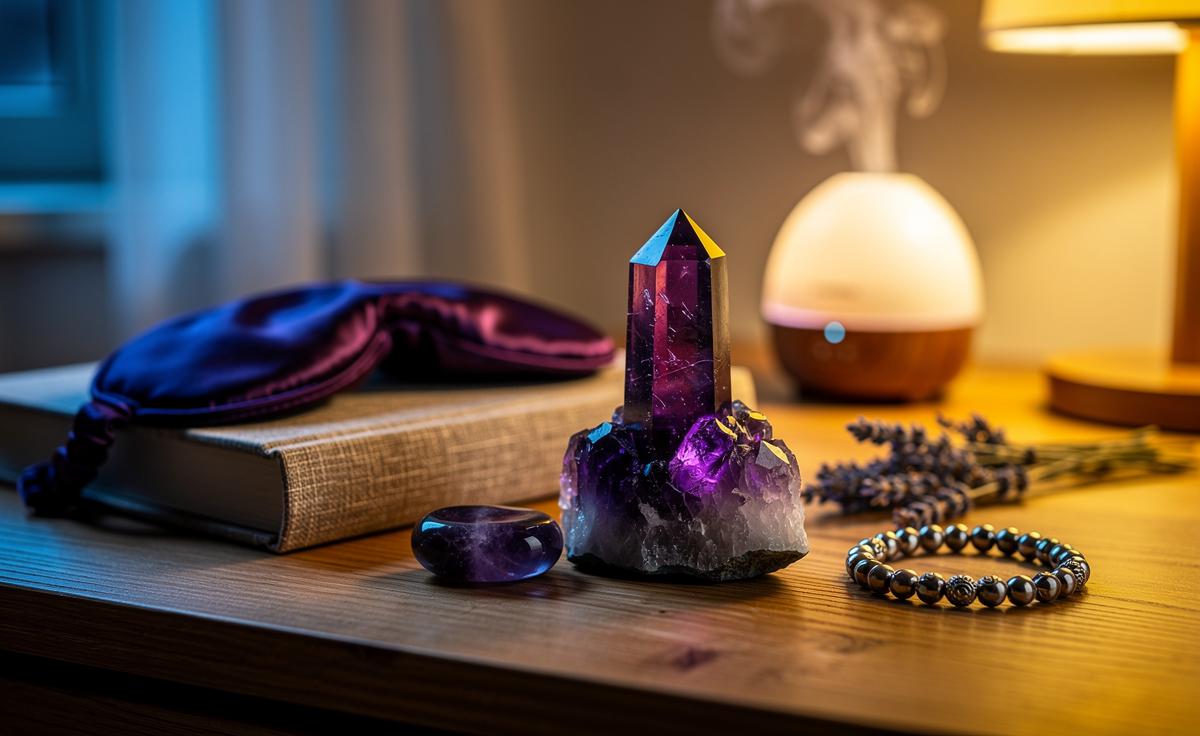
Begin by clarifying intent: are you seeking better sleep, clearer focus, or gentler evenings? Place a small cluster on your bedside and pair it with a practical routine—dimming lights, shutting screens, and three minutes of paced breathing. Ritual works best when the stone is the reminder, not the main event. For daytime, a pocket stone can anchor a two-breath pause between tasks, reducing the mental scatter that accumulates in open-plan offices and busy commutes. Journal one line after each pause to capture any shift in mood or energy.
Care is straightforward. Rinse briefly in lukewarm water, dry softly, and store away from harsh sun to prevent fading. Skip abrasive salts and prolonged ultrasonic cleaning. If you share crystals, hygiene matters more than mystique—wipe surfaces and avoid porous fabric pouches in damp conditions. Why bigger isn’t always better: large geodes impress, but a small, handled stone often delivers the most consistent behavioural cue. Align purchases with values by seeking documented provenance and artisans who disclose treatments.
- Evening cue: place amethyst on a book, not a phone—symbolism nudges behaviour.
- Desk reset: touch stone; inhale 4, exhale 6; note one priority.
- Travel kit: a bead bracelet doubles as a tactile breath counter.
- Scent pairing: lavender or vetiver oils reinforce the calm association.
What Science Says—and What We Don’t Know
From a materials perspective, quartz exhibits piezoelectric properties under mechanical stress, but there’s no evidence that a hand-held amethyst generates a health-relevant field. Systematic reviews of crystal healing find outcomes consistent with placebo, expectancy, and ritual effects. That does not make the experience meaningless. Placebo is better understood today as context-driven care—symbols, attention, and narrative shaping our nervous system responses. The point is not that “it’s all in your head,” but that head and body co-author how stress is perceived.
Why claims aren’t always better when they’re bigger: sweeping promises erode trust and distract from what amethyst can credibly support—habit formation, sensory grounding, and aesthetic signalling. In 2026, the most responsible practitioners position crystals as adjuncts to sleep hygiene, breathwork, and therapy, not as substitutes. Researchers continue to study how personal objects reinforce behavioural change, yet amethyst-specific trials remain sparse. If you’re navigating anxiety, insomnia, or pain, consult a qualified clinician first and let amethyst play a supportive, non-medical role within a plan you’ve agreed together.
- Evidence-backed: breath pacing, light hygiene, cognitive-behavioural strategies.
- Evidence-limited: crystal-specific biomedical effects.
- Promising frontier: how tactile cues improve adherence to routines.
Amethyst endures because it straddles earth science and human story: a volcanic artefact repurposed as a modern anchor for calm. Used thoughtfully, it complements routines, sparks reflection, and beautifies spaces without overpromising. If 9 January 2026 finds you rebuilding habits, a small violet stone might be the nudge you’ll actually keep. Treat it as a tool, not a talisman, and align purchases with ethics and care. What would your own “calm protocol” look like if you designed it around one simple cue you can hold, see, and return to every day?
Did you like it?4.6/5 (22)